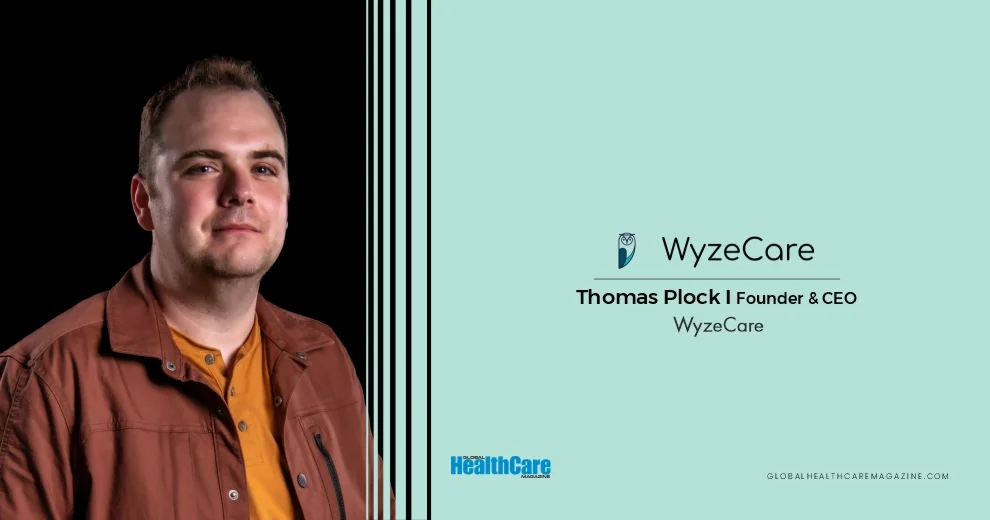
Global Healthcare Magazine recognized Thomas Plock, WyzeCare's founder and CEO, as one of the most visionary healthcare leaders of 2026.
The article is titled "Building Trust into Care Through Thoughtful Technology." It's a title that captures what we've been working toward since WyzeCare started. Not flashier tools. Not more data dashboards. Not complexity disguised as innovation. Just thoughtful, intentional technology that gets out of the way and lets people do the work they care about.
What This Recognition Means
Being featured in a profile like this doesn't happen by accident. It recognizes a specific approach to building in healthcare. An approach that says: start with the problem, listen to the people living it, and design for simplicity even when complexity would be easier.
That philosophy shaped every decision behind WyzeCare, from the product itself to how we think about our role in the healthcare ecosystem. The Global Healthcare Magazine piece captures what's been central to our work from the start: the belief that technology should serve care, not complicate it.
Starting With a Real Problem
WyzeCare's story began with lived experience. Thomas spent over fifteen years working inside enterprise software environments, understanding what it takes to build systems people can trust. At the same time, he watched his spouse navigate the daily strain of nursing, watched family members age while trying to stay independent, and saw how fragmented healthcare can feel from the outside.
That tension between the technical world and the human reality of care became the seed for WyzeCare. The insight was simple but powerful: care is a relationship. And when you treat technology that way, everything changes.
The Phone Call as an Act of Care
WyzeCare's core tool reflects this philosophy. We use something people already know and understand: the telephone. No apps to download, no wearables to remember, no dashboards competing for attention. Just a conversation.
The AI works in the background, listening for patterns and changes, escalating only when it truly matters. But the experience itself feels human because it is. It's a check-in, not an inspection. It respects dignity while still delivering the insights caregivers and families need.
This might sound like a limitation. Why not use cutting-edge biometric sensors or constant monitoring? Why keep it simple?
Because in healthcare, the simple choice is often the right one. It's the one that people actually use. It doesn't create friction or anxiety. It's the one that fits naturally into life instead of demanding that life reorganize around technology.
Listening to the People on the Front Line
One theme that emerges in the Global Healthcare Magazine profile is how much of WyzeCare's evolution has come from conversations with the people doing the work. Care coordinators, clinicians, families. Not in boardrooms or strategy sessions, but in honest conversations about what actually helps.
That feedback was humbling and clarifying. Teams didn't want another tool to manage. They wanted simplicity. They wanted to trust that the system would catch what matters without bombarding them with noise. They wanted technology that reduced their burden instead of adding to it.
Those conversations shaped the product we built. Every time we were tempted to add another feature, we asked the hard question: does this make care better or just more complicated? Most of the time, the answer was clear. We should step back instead of adding on.
Trust Comes First
One line in the article captures something essential about how we think about this work. Thomas says, "If people don't understand the system, they won't trust it. And without trust, innovation doesn't last."
That's not just a nice thought. It's the reason we embed HIPAA readiness, consent management, and data minimization directly into how WyzeCare works, not as an afterthought. It's why we're transparent about what data we collect and why. It's why we designed the system to be auditable and clear.
In healthcare, trust is the foundation. Everything else builds from there. When families know their information is protected, clinicians understand exactly what the system is doing and why, and patients feel respected rather than monitored, real connection can happen.
What Happens When You Lead With Care
The profile also explores Thomas's leadership philosophy. At its core is a single principle: do right by the people involved. The team, the partners, the users. Progress follows integrity, not the other way around.
That might sound idealistic. And maybe it is. But it's also pragmatic. When decisions are rooted in empathy and real understanding of what people need, they tend to last. Teams stay aligned. Partnerships grow deeper. Products improve because they're built on genuine care for the outcome.
That philosophy is what distinguishes a company that's just building software from one that's trying to solve a real problem. We're trying to do the latter.
The Quiet Wins That Matter
Thomas talks in the article about measuring impact in human terms. Not just charts and numbers, but moments when the system does exactly what it was supposed to do. A care team notices a concern earlier than they would have. A family feels reassured by consistent, unhurried check-ins. An older adult maintains their independence with quiet support in the background.
Those moments matter more than impressive metrics. They confirm that the work is grounded in reality, not in theory. They remind us why we started building in the first place.
Looking Ahead
This recognition from Global Healthcare Magazine feels like an important moment. Not because external validation changes what we're doing, but because it signals that healthcare has room for a different kind of approach. One that trusts in simplicity. One that listens before building. One that measures success by whether it improves people's lives, not by how many features it has.
As WyzeCare continues to grow, we're committed to staying grounded in these principles. That means keeping the platform simple and focused. That means continuing to listen to care teams and families. That means building with integrity, one decision at a time.
Thank You
To the team at Global Healthcare Magazine, thank you for the thoughtful profile and for taking time to understand what we're actually trying to do.
To our partners, our users, and everyone on the front lines of care, thank you for shaping this work by being honest about what helps and what doesn't.
And to our team at WyzeCare, thank you for staying committed to the hard work of building simple, trustworthy technology in an industry that often chooses complexity instead.
The best recognition we can receive is the trust of people who use WyzeCare every day and find that it makes their work easier and their care better. Everything else follows from that.
You can read the full profile here: https://globalhealthcaremagazine.com/magazine/thomas-plock/
If you'd like to learn more about what WyzeCare does and why we believe in this approach, we'd love to talk. Reach out anytime.